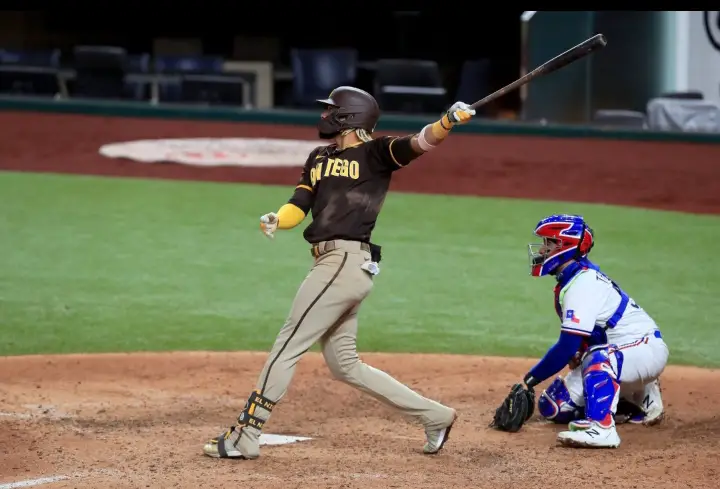
High school is when baseball players start to separate. The guys who put in the work in the weight room show up in the spring throwing harder, hitting the ball farther, and lasting deeper into games. Strength training is not about getting bulky. It is about building the explosive power that drives a 90 mph fastball and a 400-foot home run, while protecting the joints and muscles from the repetitive stress that baseball puts on the body.
A good baseball strength program is different from a general gym routine.
It prioritizes rotational power, posterior chain strength, shoulder health, and single-leg stability over bench press maxes and bicep curls.
When to Train
The offseason from October through February is the primary strength-building window. This is when players can push hard in the weight room without worrying about arm fatigue from pitching or the grind of a game schedule. During the season from March through June, dial back the volume and intensity to maintenance levels so lifting does not interfere with performance on the field.
preparing your body for game-day performance — The article discusses building strength for baseball performance; pre-game warm-up routines are the practical application of that training on game day..
Train three to four days per week in the offseason.
During the season, two days per week is enough to maintain the strength you built. Schedule lifting days so you are not squatting heavy the day before you pitch.
Core Lifts for Baseball
Trap Bar Deadlift
The trap bar deadlift is the king of baseball lifts. It trains the posterior chain, which includes the glutes, hamstrings, and lower back, in a movement pattern that mimics the hip drive behind throwing and hitting.
The trap bar is easier on the lower back than a conventional barbell deadlift, making it safer for athletes still learning to lift.
Start with three sets of five reps at a weight you can handle with solid form. Progress slowly. Deadlift strength correlates directly with throwing velocity and exit speed off the bat.
Front Squat
Front squats build quad and core strength while keeping you upright, which is better for athletic posture than back squats.
They also require less weight to be effective, reducing injury risk. Three sets of six to eight reps with controlled form builds the leg drive that powers everything in baseball.
Single-Leg Romanian Deadlift
Baseball is a single-leg sport. You throw off one leg, you hit with your weight shifting to one leg, and you run on one leg at a time. Single-leg RDLs build the hamstring and glute strength specific to those movements while improving balance and stability. Use dumbbells and perform three sets of eight reps per leg.
Landmine Press
Overhead pressing with a barbell is risky for baseball players because of the stress it puts on the shoulder.
The landmine press allows you to press at an angle that is safer for the shoulder joint while still building the pressing strength needed for throwing. Alternate between one-arm and two-arm landmine presses, three sets of eight reps.
Pull-Ups and Chin-Ups
A strong back balances the stress that throwing and hitting put on the front side of the shoulder. Pull-ups build lat strength, grip strength, and scapular control.
If you cannot do pull-ups yet, start with band-assisted versions or inverted rows and build up. Aim for three to four sets to near failure.
Rotational Power
Medicine Ball Rotational Throws
Hitting and throwing are rotational movements. Medicine ball throws train the core to transfer force from the lower body through the torso and into the hands. Stand perpendicular to a wall, load the ball at your back hip, rotate explosively, and slam the ball into the wall.
Three sets of six to eight reps per side.
Vary the positions: standing, kneeling, and split-stance throws each challenge the rotation in slightly different ways. Use a 6 to 10 pound ball. Heavier is not better since the goal is speed and explosiveness, not grinding out reps.
Cable Woodchops
Cable woodchops mimic the rotational path of a baseball swing. Set the cable at shoulder height, grip the handle with both hands, and rotate through a full range of motion from back hip to front shoulder.
Control the return. Three sets of 10 reps per side. Focus on speed in the rotation and control in the return.
Shoulder Health and Arm Care
The shoulder is the most vulnerable joint in a baseball player's body. Strengthening the rotator cuff and scapular stabilizers is not exciting, but it is the difference between playing all season and sitting out with an injury.
Band Pull-Aparts
Hold a resistance band at arm's length in front of your chest and pull it apart until your arms are fully extended to the sides. This strengthens the rear deltoids and rhomboids that stabilize the shoulder during throwing.
Three sets of 15 to 20 reps as a warm-up before every lifting session and every throwing day.
External Rotation with Band
Pin your elbow to your side with your forearm pointing forward. Hold a band anchored at elbow height and rotate your forearm outward against the resistance. This directly strengthens the rotator cuff muscles that decelerate the arm after throwing. Three sets of 15 reps per arm.
Prone Y-T-W Raises
Lie face down on a bench with light dumbbells.
Raise your arms into a Y shape overhead, then a T shape to the sides, then a W shape with elbows bent. Each position targets different scapular stabilizers. Two sets of 10 in each position.
Sample Offseason Week
Monday (Lower Body): Trap bar deadlift 3x5, front squat 3x6, single-leg RDL 3x8 each, lateral lunges 3x8 each, calf raises 3x12.
Tuesday (Upper Body): Landmine press 3x8, pull-ups 4 sets, dumbbell rows 3x10, band pull-aparts 3x20, external rotation 3x15.
Thursday (Power): Med ball rotational throws 3x8 each side, broad jumps 4x3, box jumps 3x5, cable woodchops 3x10 each side.
Friday (Full Body): Goblet squat 3x8, push-ups 3x15, inverted rows 3x10, single-leg hip thrust 3x10 each, prone Y-T-W 2x10 each.
Nutrition Basics
Strength training without adequate nutrition is wasted effort.
High school athletes need protein at every meal to support muscle recovery: eggs, chicken, beef, fish, Greek yogurt, and whey shakes. Carbohydrates fuel the training: rice, oats, potatoes, fruit, and whole grains. Eat a meal with protein and carbs within an hour of finishing a workout.
Sleep is the other non-negotiable. Growth hormone, which drives muscle repair and development, is released primarily during deep sleep. Eight to nine hours per night is the target. The guys who train hard and sleep well are the ones who make the biggest gains.
Final Thoughts
Strength training for baseball is not about how much you bench. It is about building a body that generates explosive rotational power, withstands the stress of throwing and hitting, and stays healthy through a long season. Start with the core lifts, prioritize shoulder health, train with intention, and the results will show up on the field.