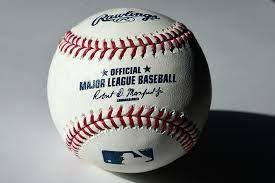
The grip is where every pitch starts. Before arm action, before mechanics, before release point, the way you hold the baseball determines what the pitch does when it leaves your hand. Different grips create different spin axes, which produce different movement patterns. A pitcher who can command three or four different pitches with confidence keeps hitters guessing all game.
reading a pitcher's body language — The source discusses how grip and mechanics affect pitch execution; linking to body language reading provides hitters with complementary knowledge about detecting pitcher intent before release..
Four-Seam Fastball
The four-seam fastball is the foundation of every pitcher's arsenal. It is the straightest, fastest pitch, and the one you throw when you need a strike. Grip the ball across the horseshoe seam, where the seams are closest together. Your index and middle fingers sit on top, perpendicular to the seams. Your thumb rests directly underneath on the smooth leather. Your ring finger and pinky curl against the side of the ball for stability.
Do not squeeze the ball tightly. Hold it firmly but with enough space between the ball and your palm that you could slide a finger through the gap. A loose grip generates more backspin, which is what gives the four-seam its "rising" action. The ball does not actually rise, but the backspin fights gravity and makes it drop less than hitters expect.
Two-Seam Fastball (Sinker)
The two-seam fastball moves. Instead of fighting gravity like the four-seam, it works with gravity and generates horizontal movement, typically running in toward same-side hitters. Grip the ball along the narrow seams where they run closest together. Your index and middle fingers sit on top of the seams rather than across them.
Applying slightly more pressure with your index finger encourages the ball to tail toward the arm side. Applying more pressure with the middle finger produces more sinking action. The two-seam is typically 2 to 5 mph slower than the four-seam but generates ground balls because of the downward and lateral movement.
Changeup
The changeup is a speed-of-arms pitch thrown with a fastball arm speed but a grip that kills velocity. The goal is to make the hitter's timing early. There are several changeup grips, but the circle change is the most common and effective.
Form a circle with your thumb and index finger on the side of the ball (like making an "OK" sign). Your middle, ring, and pinky fingers drape over the top of the ball. The key is to keep your wrist behind the ball and throw it with the same arm action as your fastball. The grip and the way the ball slides out of your hand naturally reduce velocity by 8 to 12 mph.
For younger pitchers or those with smaller hands, the three-finger changeup is an easier alternative. Place three fingers across the top of the ball instead of two, and center the ball deeper in your palm. The extra friction slows the pitch without requiring the circle grip.
Curveball
The curveball generates topspin, which makes the ball dive downward as it approaches the plate. Grip the ball with your middle finger along the longest seam. Your index finger rests beside it. Your thumb sits underneath on the opposite seam. At release, snap your wrist forward and down, pulling the front of the ball toward the ground. Think of it as pulling down a window shade.
The curveball should feel like it rolls off your index finger at release. A good curveball has a visible downward arc that makes hitters swing over the top of it. The typical curveball is 12 to 18 mph slower than the fastball and has significant vertical drop.
A word of caution for young pitchers: the curveball puts stress on the elbow when thrown incorrectly. Learn proper mechanics from a qualified pitching coach before adding a curveball to your repertoire, and do not throw it excessively during development years.
Slider
The slider is a breaking ball that moves laterally with a tight spin. Grip the ball slightly off-center, with your index and middle fingers shifted toward the outside of the ball. At release, let the ball roll off the side of your index finger rather than coming straight off the fingertips. The action is similar to throwing a football spiral.
A good slider has tight rotation and sharp, late break. It looks like a fastball out of the hand before darting sideways in the last few feet before the plate. The velocity is typically 5 to 10 mph below the fastball. The slider is one of the most effective strikeout pitches in baseball but requires refined feel and consistency.
Cutter
The cutter (cut fastball) is a hybrid between a fastball and a slider. It has fastball velocity but moves 2 to 4 inches toward the glove side. Grip it like a four-seam fastball but shift your fingers slightly off-center toward the outside of the ball. At release, apply slightly more pressure with your middle finger.
The result is a pitch that looks like a fastball but moves just enough to miss the sweet spot of the bat, producing weak contact. Mariano Rivera made a career out of one pitch: a cutter. It is effective because the movement is subtle and late, giving hitters almost no time to adjust.
Developing Your Arsenal
Young pitchers should master the four-seam fastball and changeup before adding breaking balls. Those two pitches, thrown with command to both sides of the plate, are effective through high school and into college. The changeup is safer for young arms than breaking balls and develops the arm action and feel that make breaking balls easier to learn later.
As pitchers mature physically and mechanically, add a breaking ball (curveball or slider, not both initially) and a two-seam fastball or cutter. Most professional pitchers rely heavily on three pitches. Four is a luxury. Two thrown well is better than four thrown inconsistently.
- Practice grips with a ball in hand constantly. Watch TV, sit in class, ride in the car. The grip should feel natural and automatic.
- Throw every pitch with the same arm speed and arm slot. The grip and spin do the work.
- Command is more important than movement. A straight fastball on the corner is better than a nasty slider that bounces in the dirt.
The pitching grip is the simplest and most repeatable part of pitching. Everything else involves complex mechanics and timing. Start with the grip, get comfortable with the feel, and the results follow.